Race restrooms in Orem need one unit per 150 to 200 runners at the start line, plus extras at aid stations and the finish chute. A 5K with 400 runners typically runs 2 to 3 standard units at the start and one at the halfway mark. Orem Porta Pros builds the layout around your course map, not a flat headcount.
Start with the start line, because that's where the line forms before the gun goes off. A field of 500 runners waiting 20 minutes before a race wants more capacity than the same field jogging past an aid station for 10 seconds. Orem Porta Pros sizes starts heavier than mid-course stops for that reason. Standard porta potty rental units cover most start corrals, and pricing runs in the event band on our porta potty rental cost page rather than a flat day rate, since race organizers usually book for the whole event window instead of by the day. OSHA's 1926.51(c) ratio was written for job sites, not road races, but it's still the reference point organizers ask about, and we explain the difference on our OSHA portable toilet requirements page. For a full breakdown by attendance size, our how many porta potties do I need guide walks through corrals, aid stations and finish areas separately. Courses that loop back through the same intersection twice can often share one restroom cluster instead of setting two, which saves on delivery. If your race crosses through Orem and finishes somewhere like Provo, 5.6 miles southeast, we coordinate placement across both jurisdictions so nothing gets left off the route map.
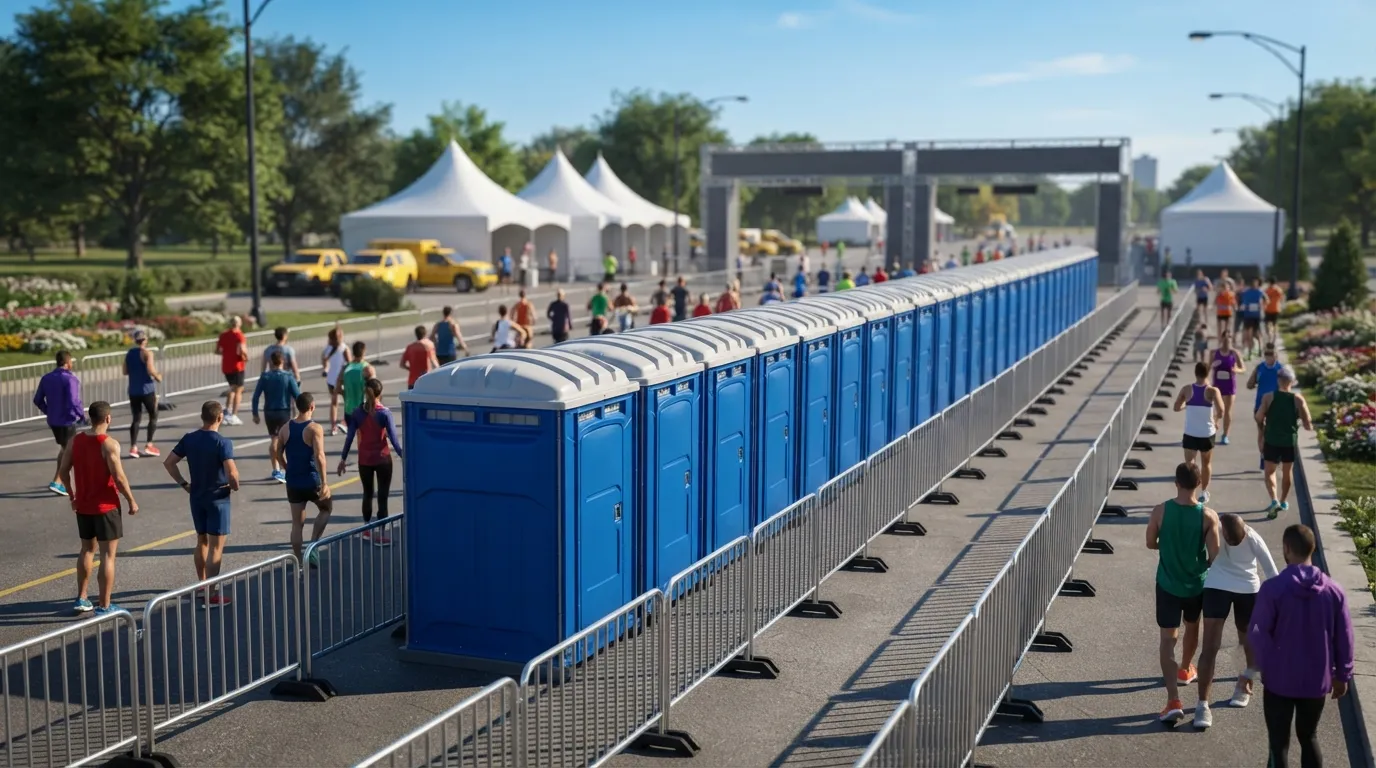
Never at the exact turn of a corner, and never blocking a runner's sightline to the next course marker. Placement matters as much as count. A unit set 10 feet off the shoulder, facing away from the road, keeps the porta potty placement guide rules intact and keeps volunteers from having to reroute cones around a door swing. Every cluster needs at least one accessible unit under ADA Standards section 213.2, which requires 5 percent of clustered single-user toilets to be accessible, never fewer than one, and that unit needs a 60 inch turning circle per ADA Standards section 304.3.1 and a stable, slip-resistant surface under it per section 302.1. Gravel shoulders and grass slopes fail that standard fast, so we scout the actual ground, not just the map. Aid stations with medical tents often add a handwashing station rental unit next to the restrooms, since 29 CFR 1910.141(d)(2) requires soap and towels at handwashing stations, not just sanitizer. If your finish line runs power for timing equipment or a PA system, ask us how to brace a temporary power pole before race morning; stake it at two points minimum and keep the guy-wire clear of the runner corridor, the same clearance logic we use for temporary power pole setups on job sites. Courses through American Fork, 8.7 miles northwest of Orem, often share this exact layout for their spring races.
Race pricing is built around the event, not the calendar day, which is why our table below uses the event and weekend bands instead of a straight daily rate.
| unit | duration | low | typical | high |
|---|---|---|---|---|
| standard | event | 200 | 400 | 800 |
| standard | weekend | 125 | 250 | 400 |
| ada | weekend | 199 | 240 | 300 |
| deluxe | week | 150 | 250 | 290 |
Multi-day races, like a Friday-to-Sunday marathon weekend, run the weekend band instead of stacking daily rates. Deluxe flushable units, covered on our deluxe flushable porta potty page, show up more at finish-line festival zones than mid-course, since runners spend longer there. A delivery fee applies on top of the unit cost, and our porta potty rental per day and monthly porta potty rental pages cover the difference for organizers also running training camps or multi-week event build-outs. If your race needs a full trailer instead of standalone units, check restroom trailer rental or the restroom trailer rental cost breakdown. Races that also need fencing for the chute or barricades along the course can bundle in temporary fence rental or crowd control barrier rental with the same delivery run, which is often cheaper than two separate trips to Orem.
Book as soon as the course map is final, ideally 4 to 6 weeks out for anything over 500 runners. Popular race weekends in Orem fill delivery slots fast, and late bookings limit which units are available. Confirm final counts a week before, once bib registration numbers settle.
Yes. Courses that start in Orem and finish in Pleasant Grove, 6.4 miles northwest, or loop through Provo are common, and we plan one delivery route covering every stop rather than treating each city as a separate job.
Yes, short event windows are common for 5Ks and fun runs. Pricing sits in the event band rather than a full weekend rate, and pickup happens the same afternoon once the course clears.
Units stay in place and stay usable. Ground stability matters more than the rain itself, so we check drainage at each site during placement, especially near ADA units where the surface has to stay stable and slip-resistant.
Most races add at least one, especially near food or medical tents. It is not required by a general OSHA rule, but organizers often want it near aid stations regardless, and it pairs easily with the same delivery as your restroom units.
Yes. Orem Porta Pros delivers marathon and race restrooms across Orem and the surrounding metro, with same-day and next-day drop-off available on most orders.
Pricing depends on the unit and how long you need it. See our cost breakdown and request a free quote for an exact figure.
Standard rentals include scheduled service — a pump-out, a clean, a restock and fresh deodorizer. Busy or hot-weather sites can be serviced more often.
Call now or request a free quote — clean units, on-time delivery, transparent pricing.